“Art is not an end in itself, but a means of addressing humanity.”
Modest Mussorgsky
As philosopher Richard Wollheim says, art is “one of the most elusive of the traditional problems of human culture.” In its simplest manifestation, art is a form of communication that serves as a vehicle for the expression of emotions and ideas. As ideas and beliefs are culturally specific and constantly changing over time, there really is no generally agreed definition of what constitutes art. That being said, the classical branches of the visual arts are identified as painting, sculpture and architecture. Literature and poetry are considered part of the humanities or as one of the arts, while music, alongside theatre, film and dance belong to the performing arts. In this section you will discover not only specific explorations of individual art forms, but also a more detailed probing of the relationship between the visual arts and music, including painting and music, sculpture and music and architecture and music. Originally, poetry and music were treated as a unity, but gradually they have become more independent. Nevertheless, the two art forms have never forgotten their shared genetic makeup, and been intertwined for millennia. Art and music have engaged in a dynamic relationship that reveals a diverse range of human activity intended to be appreciated for their beauty.
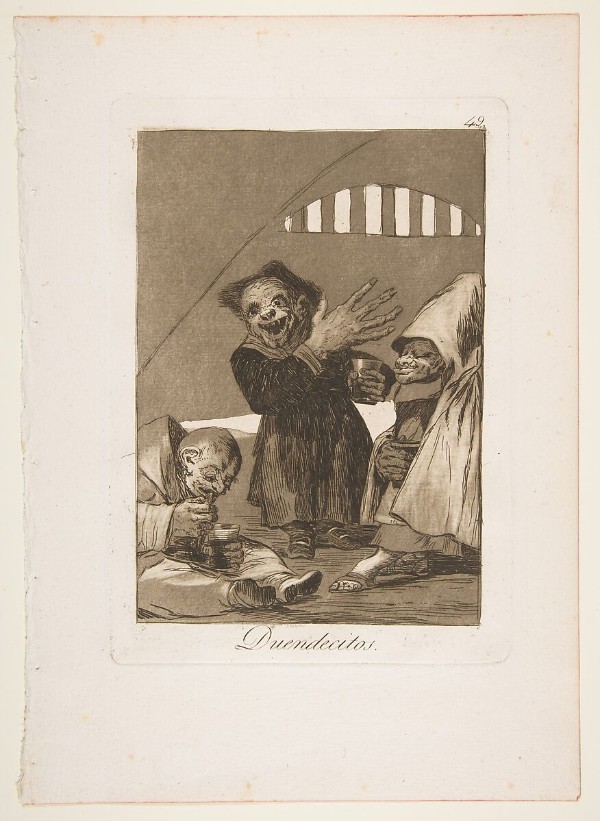
Inspirations Behind Simon Holt’s a book of colours – No. 1. duendecitos The three grotesques are at their meal, cups and bread ready. But these are Goya’s vision of the clergy of his day: rapacious and demanding, full of false
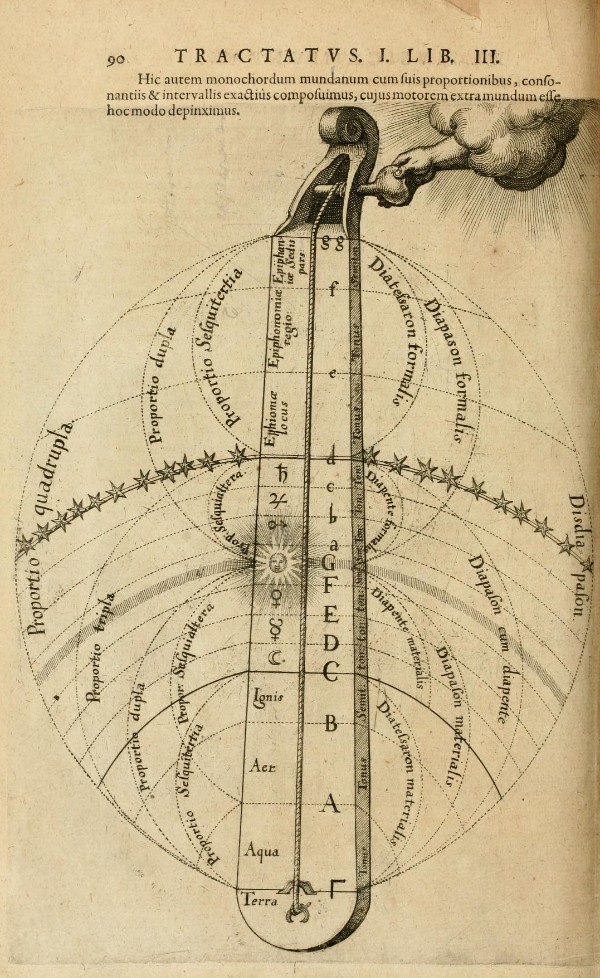
Between 1617 and 1621, the English writer Robert Fludd (1574–1637) produced his Utriusque Cosmi, Maioris scilicet et Minoris, metaphysica, physica, atque technica Historia (The metaphysical, physical, and technical history of the two worlds, namely the greater and the lesser). Fludd
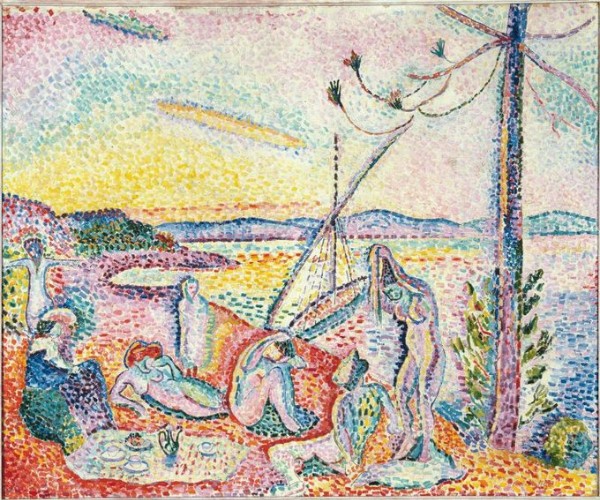
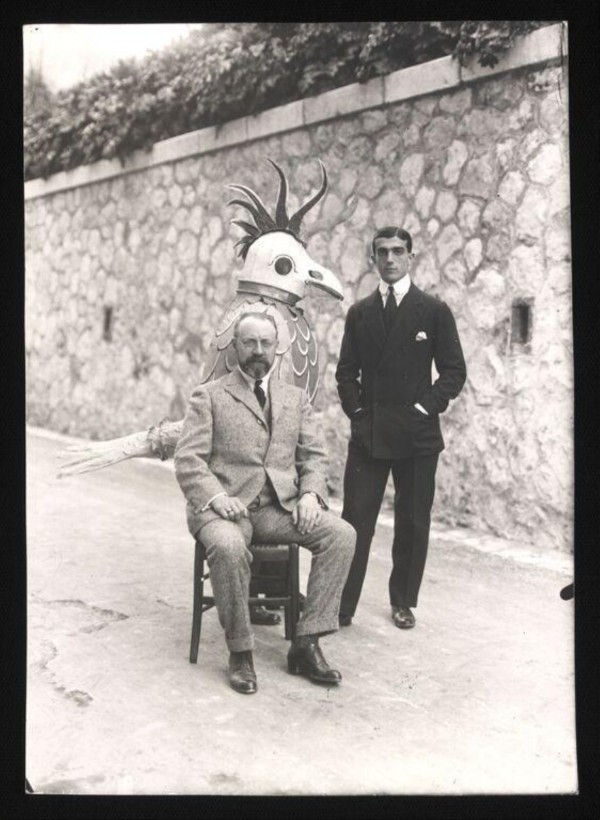
Inspirations Behind Edward Gregson’s 3 Matisse Impressions In his 1997 updating of his 1993 work for recorder and piano, British composer Edward Gregson (b. 1945) expanded performing forces to recorder and chamber orchestra. In his Three Matisse Impressions, Gregson gives
Inspirations Behind Tracy Silverman’s Between the Kiss and the Chaos Created initially as music for five scenes from a puppet opera, composer and electric violinist Tracy Silverman combined the idea of creation in the arts with his ideas of how
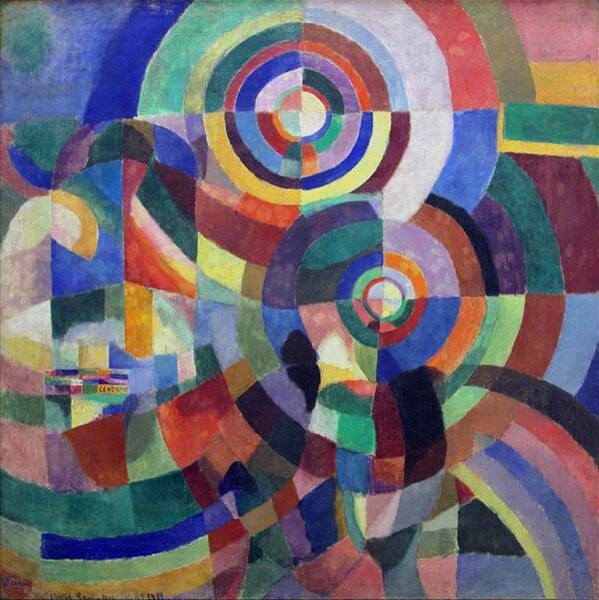
Eric Montalbetti’s Trio Inspired by Suprematism, Orphism, and Futurism French composer Eric Montalbetti (b. 1968) designed his Trio for violin, cello, and piano around three modernist artistic styles: Suprematism, Orphism, and Futurism. Suprematism was developed by the Soviet artist Kazimir
The Nightingale Collaboration Even though they were contemporaries, Igor Stravinsky (1882–1971) and Henri Matisse (1869–1954) are rarely regarded together. In 1925, however, the two collaborated on a project for the Ballets Russes on a ballet version of Stravinsky’s first opera,
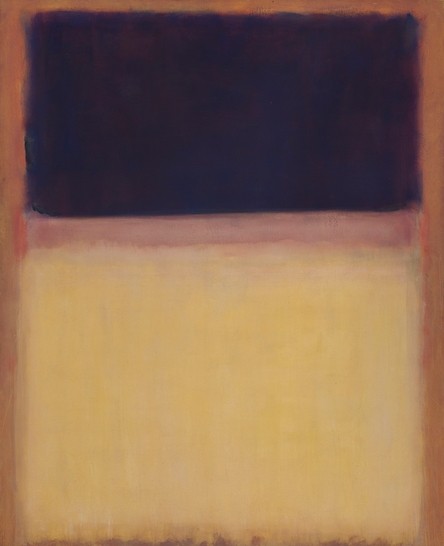
Inspirations Behind Daníel Bjarnason’s Over Light Earth Two mid-20th-century abstract impressionist paintings were the source of inspiration for Icelandic composer Daníel Bjarnason. Mark Rothko’s 1954 painting No. 9 (Dark over Light Earth/Violet and Yellow in Rose) and Jackson Pollock’s groundbreaking
Paintings that Inspired William Popp’s ‘The Galleries’ Suite Composer William Popp (b. 1950) puts together his own gallery of art in The Galleries. Looking at one 16th-century and three 19th-century paintings held in museums in London, Madrid, Washington, DC, and