Emily, possibly the most famous of the three Brontë sisters, was born on 30 July 1818 in Haworth, Yorkshire. She is best known for her only novel Wuthering Heights, a highly imaginative work of passion and hate set on the Yorkshire moors. Emily Brontë essentially spent her life in solitude, nurturing a highly reserved personality and leaving behind no correspondence of interest.
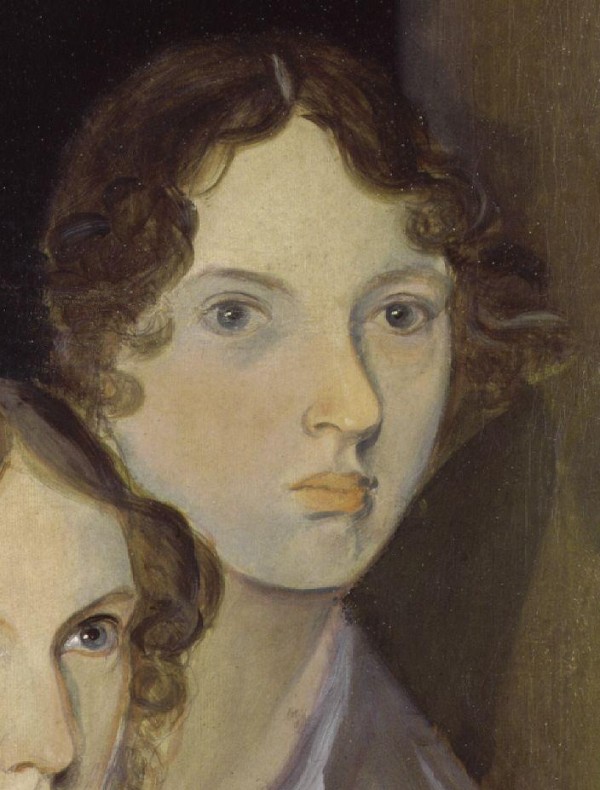
Emily Brontë
The only poems that were published in her lifetime were included in a slim volume by her and her sisters Charlotte and Anne, and it sold a mere two copies. In celebration of her birthday, we can certainly do better and have decided to feature a song-cycle for soprano and piano by John Joubert, titled Six Poems by Emily Brontë.
John Joubert: 6 poems by Emily Bronte, Op. 63 – No. 1. Harp (John McCabe, piano; Lesley-Jane Rogers, soprano)
Harp of wild and dream-like strain,
When I touch thy strings,
Why dost thou repeat again
Long-forgotten things?
Harp, in other, earlier days,
I could sing to thee;
And not one of all my lays
Vexed my memory.
But now, if I awake a note
That gave me joy before,
Sounds of sorrow from thee float,
Changing evermore.
Yet, still steeped in memory’s dyes,
They come sailing on,
Darkening all my summer skies,
Shutting out my sun.
Biographical Unknowns
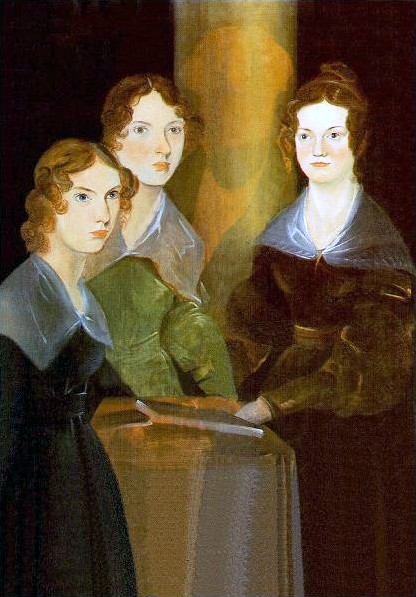
Brontë sisters
Given the relative sparsity of information regarding Emily Brontë’s biography, she has become a somewhat mysterious and mythical figure. Some writers see her as an isolated artist painting birds and striding the Yorkshire moors, while others find a painfully shy girl-woman unable to leave the confines of her home.
John Joubert: 6 poems by Emily Bronte, Op. 63 – No. 2. Sleep (John McCabe, piano; Lesley-Jane Rogers, soprano)
Sleep brings no joy to me,
Remembrance never dies,
My soul is given to mystery,
And lives in sighs.
Sleep brings no rest to me;
The shadows of the dead,
My wakening eyes may never see,
Surround my bed.
Sleep brings no hope to me,
In soundest sleep they come,
And with their doleful imagery
Deepen the gloom.
Sleep brings no strength to me,
No power renewed to brave;
I only sail a wilder sea,
A darker wave.
Sleep brings no friend to me
To soothe and aid to bear;
They all gaze on how scornfully,
And I despair.
Sleep brings no wish to fret
My harassed heart beneath;
My only wish is to forget
In endless sleep of death.
Emily Brontë is frequently described as a brusque intellect unwilling to deal with normal society, or an ethereal soul too fragile to confront the temporal world. Literary criticism aside, we do have a roughly contemporary view of her character. “Under an unsophisticated culture,” a reviewer wrote, “inartificial tastes, and an unpretending outside, lay a secret power and fire that might have informed the brain and kindled the veins of a hero; but she had no worldly wisdom; her powers were unadapted to the practical business of life. An interpreter ought always to have stood between her and the world.”
John Joubert: 6 poems by Emily Bronte, Op. 63 – No. 3. Oracle (John McCabe, piano; Lesley-Jane Rogers, soprano)
Mythmaking
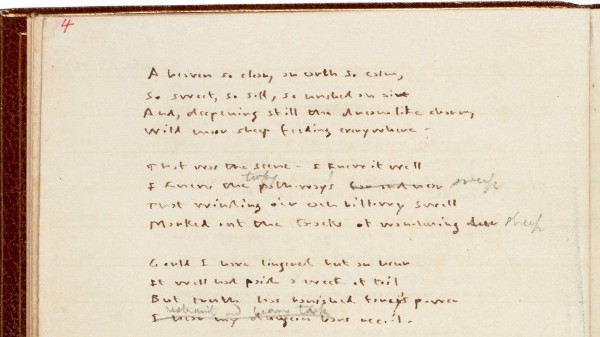
Emily Brontë’s poem
Her sister Charlotte Brontë actually became her first mythographer as she wrote in the preface to the Second Edition of Wuthering Heights: “My sister’s disposition was not naturally gregarious; circumstances favoured and fostered her tendency to seclusion; except to go to church or take a walk on the hills, she rarely crossed the threshold of home.
Though her feeling for the people around was benevolent, intercourse with them she never sought; nor, with very few exceptions, ever experienced. And yet she knew them: knew their ways, their language, their family histories; she could hear of them with interest, and talk of them with detail, minute, graphic, and accurate; but WITH them, she rarely exchanged a word.”
John Joubert: 6 poems by Emily Bronte, Op. 63 – No. 4. Storm (John McCabe, piano; Lesley-Jane Rogers, soprano)
The night is darkening round me,
The wild winds coldly blow;
But a tyrant spell has bound me
And I cannot, cannot go.
The giant trees are bending
Their bare boughs weighed with snow.
And the storm is fast descending,
And yet I cannot go.
Clouds beyond clouds above me,
Wastes beyond wastes below;
But nothing drear can move me;
I will not, cannot go.
Poetic Enigmas
If we know little of Emily’s life, almost nothing is known about the last two years of her life. We do know that she fell ill with consumption in October 1848 and refused all medical help. She died at the age of thirty on 19 December 1848. Approaching Emily Brontë’s poetry is certainly no easy task, as readers “must sort through various contractions in order to approach her work with even a little confidence.”
As a literary scholar wrote, “Emily wrote most of her poetry during what is technically the Victorian period, but her exploration of the self, the imagination, and the visionary associate her more closely with Romantic poets such as Samuel Taylor Coleridge and William Wordsworth than with Alfred, Lord Tennyson, and Robert Browning.”
John Joubert: 6 poems by Emily Bronte, Op. 63 – No. 5. Caged Bird (John McCabe, piano; Lesley-Jane Rogers, soprano)
And like myself alone, wholly alone,
It sees the day’s long sunshine glow;
And like myself it makes its moan
In unexhausted woe.
Give us the hills our equal prayer;
Earth’s breezy hills and heaven’s blue sea;
We ask for nothing further here
But our own hearts, the joy of liberty.
Could my hand unlock the chain,
How gladly would I watch it soar,
And never regret, and never complain
To see its shining eyes no more.
John Joubert

John Joubert
Emily Brontë wrote poetry with no intention of publishing or even showing it to her family. “Her life remains an enigma, and her poetry refuses easy classification.” As such, countless scholars and authors have tried to decode her willingness to confront the issues challenging the human spirit. And one such artist is composer John Joubert, born in Cape Town, South Africa.
Joubert hailed from a family of Protestant refugees from France who had settled in the Dutch colony in the Cape, in the 17th Century. He received early instruction from his mother, an accomplished pianist who had studied with Harriet Cohen in London. Joubert received a scholarship to the Royal Academy of Music in 1946, and his compositions quickly saw performances.
John Joubert: 6 poems by Emily Bronte, Op. 63 – No. 6. Immortality (John McCabe, piano; Lesley-Jane Rogers, soprano)
No coward soul is mine,
No trembler in the world’s storm-troubled sphere
I see Heaven’s glories shine
And Faith shines equal, arming me from Fear
O God within my breast
Almighty, ever-present Deity
Life that in me has rest
As I, Undying Life, have power in Thee
Vain are the thousand creeds
That move men’s hearts, unutterably vain,
Worthless as withered weeds
Or idlest froth amid the boundless main
To waken doubt in one
Holding so fast by thine infinity
So surely anchored on
The steadfast rock of Immortality
With wide-embracing love
Thy spirit animates eternal years
Pervades and broods above,
Changes, sustains, dissolves, creates and rears
Though Earth and Man were gone
And suns and universes ceased to be
And Thou wert left alone,
Every existence would exist in thee
There is not room for Death
Nor atom that his might could render void
Since Thou are Being and Breath,
And what THOU art may never be destroyed.
Six Poems by Emily Brontë
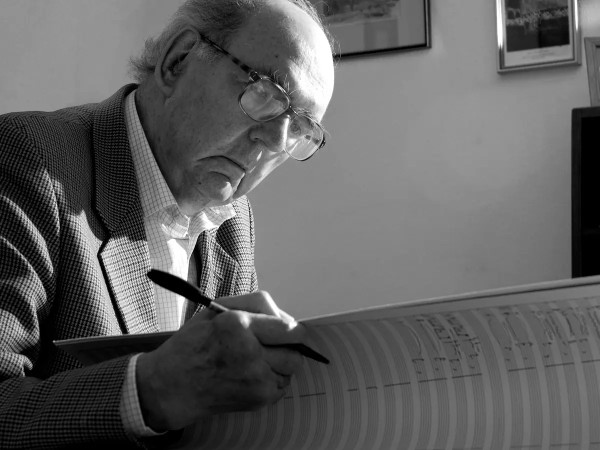
John Joubert
For his Opus 63, Joubert selected six poems for a song-cycle that outlines a spiritual journey from the mood of regret for the past to one of defiant optimism. As he writes in his notes, in the first poem “Harp,” the poetess invokes a past happiness that she feels is lost beyond recall, a mood more intensely explored in the second song “Sleep.” The third song, “Oracle”, offers a dialogue in which a child, consulted by the poet, sees the future as a blinding vision of eternity.
“Storm” unleashes the forces of nature, in complete surrender to which the poet seeks escape from all sense of personal identity, while the “Caged Bird” becomes the symbol for Emily Brontë’s own captive spirit, longing to soar away to eternal freedom. In the final poem, “Immortality,” life becomes a visionary process beyond and outside time. “It is the climax of the cycle in its rejection of the material world in favour of a mystical faith transcending the dogmatic limitations of organised religion.”
The cycle, according to the composer, has a resemblance to Schubert’s two great song-cycles. For one, there is a tendency of the poetic imagery to inform the piano part with illustrative thematic material, which is translated into a musically equivalent symbolic language. In addition, Joubert provides structural variety as the final song musically becomes a set of variations.
For more of the best in classical music, sign up for our E-Newsletter