

The double bass is often thought of as the foundation of the orchestra: deep, resonant, and usually playing a supportive role.
In music as in architecture, foundations rarely find themselves in the spotlight.
But over the centuries, a handful of composers have written striking concertos that showcase the instrument’s warm and unique sound.
From the classical era to the modern day, these ten concertos prove that the bass can shine as a solo instrument when it is brought front and center.
Here are our picks for ten of the best double bass concertos of all time.
Carl Ditters von Dittersdorf: Bass Concerto No. 2 (1762)
Carl Ditters von Dittersdorf (1739–1799), a contemporary of Haydn and Mozart, gave the double bass one of its earliest starring roles in his two double bass concertos.
His 1762 concerto is written in a bright, Classical style, featuring elegant melodies that come off as delightfully surprising, given the instrument’s low pitch.

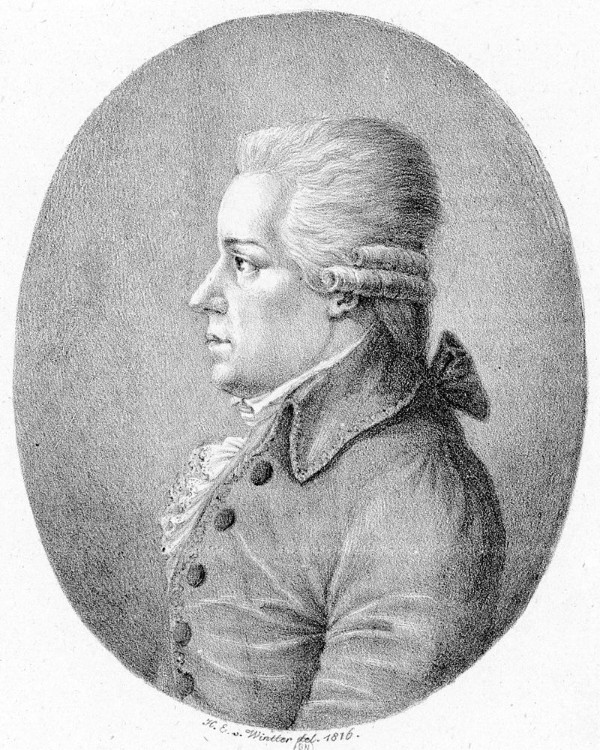
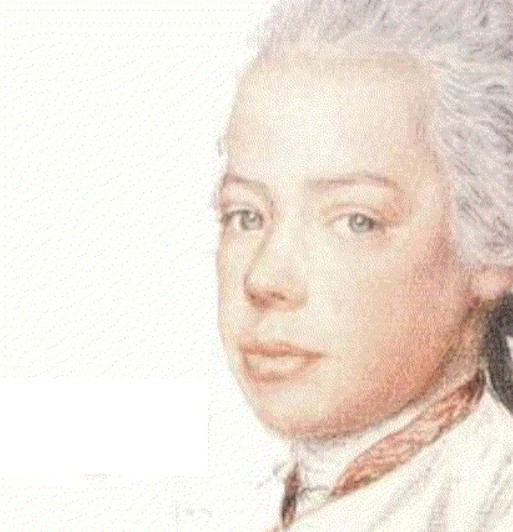
Carl Ditters von Dittersdorf
Dittersdorf wrote his concertos for his friend and colleague Friedrich Pischelberger, a pioneering virtuoso who expanded the bass’s solo technique.
Basses in Dittersdorf’s time and place were tuned differently (five strings tuned F, A, D, F#, A) than they are today (four strings tuned E, A, D, G). This is known as Viennese tuning and, if it’s followed, can take some adjusting from all performers involved!
Learn more about the composer and work in this short YouTube documentary:
Who was Dittersdorf and why is his bass concerto so popular?
Jan Křtitel Vaňhal: Double Bass Concerto (1773)
Czech composer Jan Křtitel Vaňhal, another of Mozart’s contemporaries, brought an operatic expressiveness to his double bass concerto.
Written in 1773, it highlights the bass’s lyrical voice and requires a cheerful agility from the soloist.

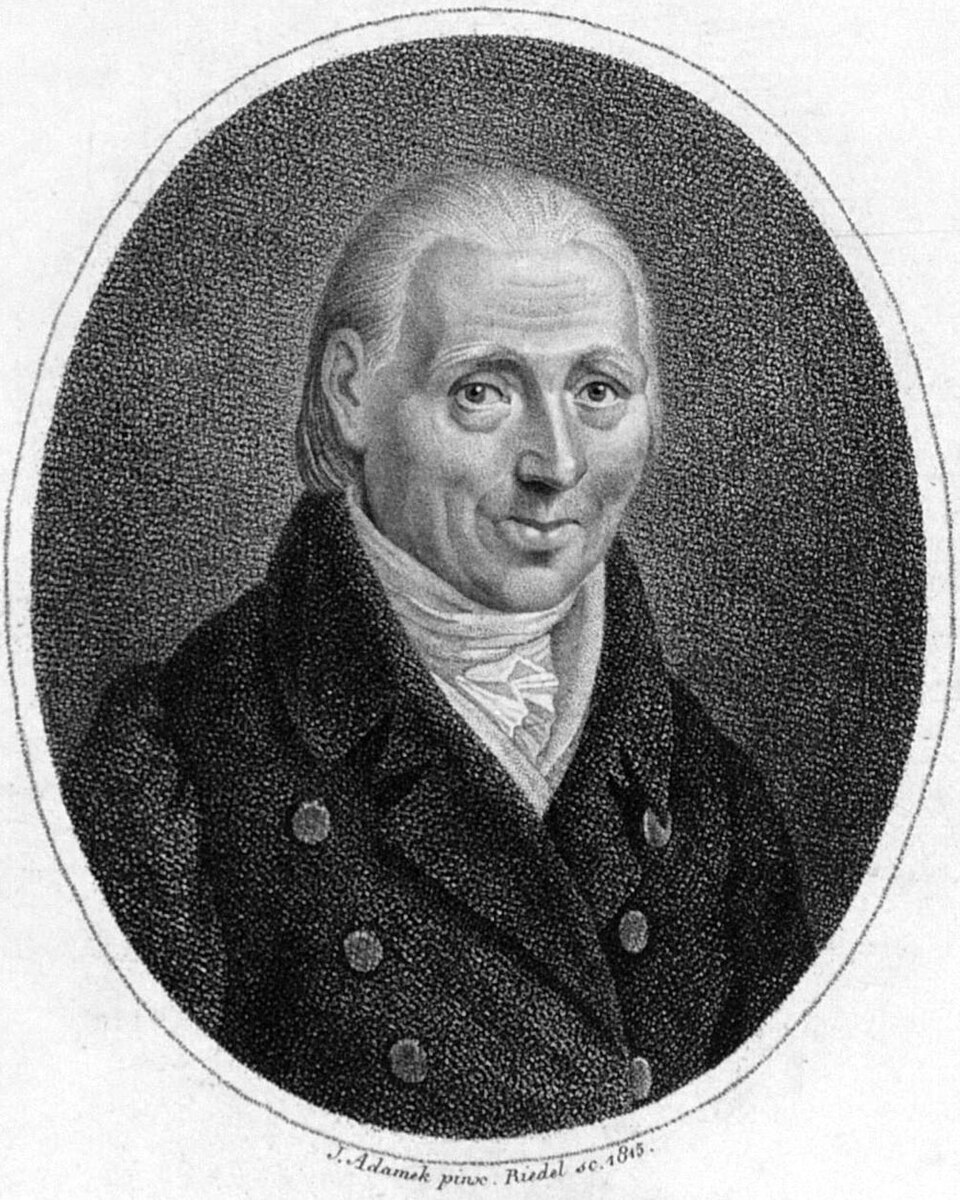
Jan Křtitel Vaňhal
Like the Dittersdorf, this concerto was also originally written using Viennese tuning. Today, it is often played in a transposed version.
Johannes Matthias Sperger: Bass Concerto No. 15 (1796)
Johannes Matthias Sperger was one of the great bass virtuosi of his time, writing a jaw-dropping eighteen concertos for his instrument.

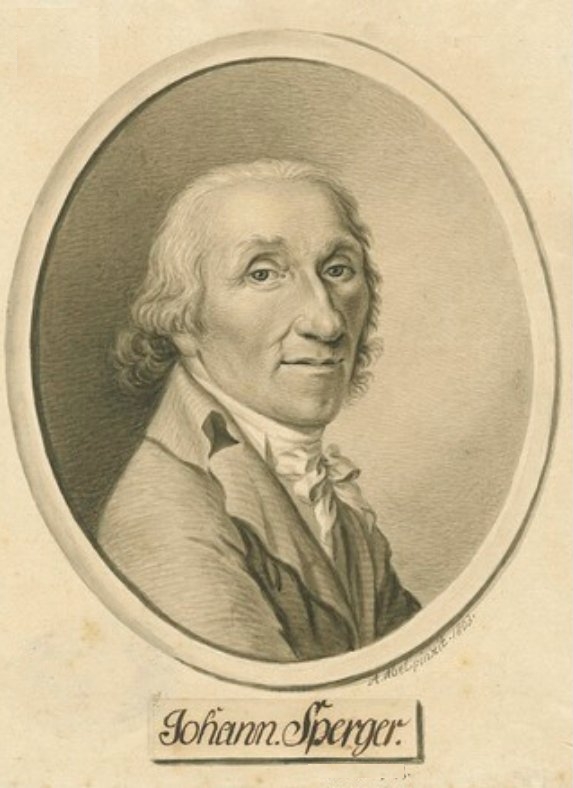
Johannes Matthias Sperger
His Concerto No. 15 in D-major is particularly beloved for its blend of elegant classical melodies and virtuosic fireworks. One can immediately hear his ease with both the instrument and the genre.
Compared to earlier concertos, you can really hear the influences of the Sturm und Drang (Storm and Stress) movement that had swept through European concert music at the end of the eighteenth century.
This style foregrounded virtuosic individualism and emotional intensity, both of which you’ll get plenty of in this concerto.
The Romantic Era may not have arrived yet, but music like this was helping to pave the way.
Giovanni Bottesini: Bass Concerto No. 2 (1845)
Nicknamed the “Paganini of the Double Bass”, Giovanni Bottesini was among the nineteenth century’s most exciting bass virtuosos.
He was born in Italy in 1821 to a poor family. Initially, he played the violin, but he learned the basics of the bass within a matter of weeks in order to secure a scholarship at the Milan Conservatory. The rest is history!

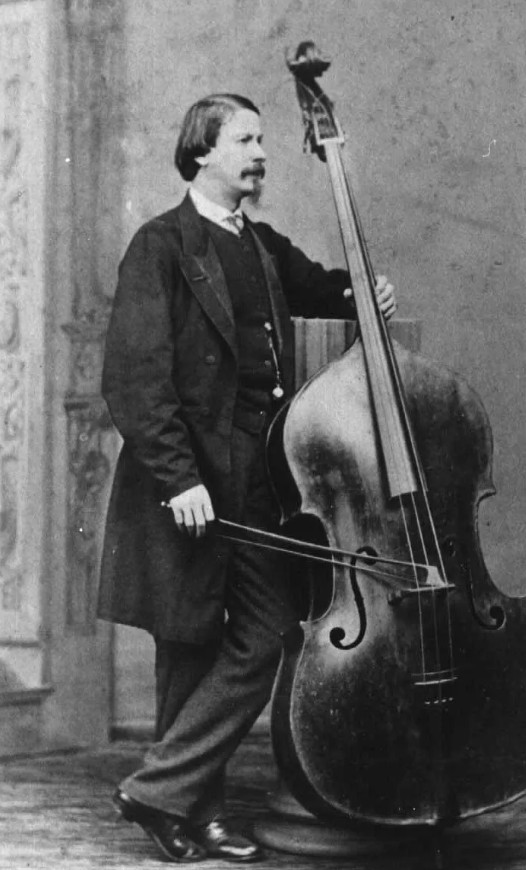
Giovanni Bottesini
His second concerto is filled with bel canto lyricism and theatrical flair (what else would you expect from an Italian composer steeped in opera?).
This concerto transforms the bass into a singing, acrobatic solo voice. It is irresistible.
Serge Koussevitsky: Bass Concerto (1902)
Before becoming one of the most important conductors of the twentieth century, Serge Koussevitsky worked as a virtuoso double bassist.
He began his professional orchestral career at twenty, accepting a position in the storied Bolshoi Theatre orchestra. He became the principal bass there in 1901, when he was in his mid-twenties.

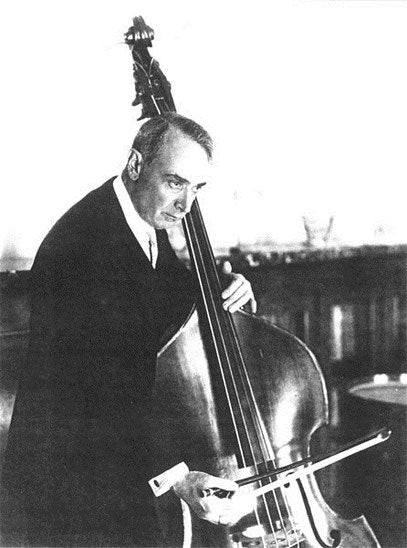
Serge Koussevitsky
His 1902 concerto in F-sharp minor is one of the most expressive works in the instrument’s repertoire, with its lovely blend of late-Romantic lushness and Russian passion.
Domenico Dragonetti (?) / Édouard Nanny: Bass Concerto (1925)
In 1925, French bassist Édouard Nanny published a concerto attributed to Domenico Dragonetti (1763–1846).
However, over the years, the work’s paternity has been questioned. Nowadays, musicologists generally agree that the composition was actually a Nanny original, merely crafted in the style of Dragonetti, as opposed to being an authentic example of his work.

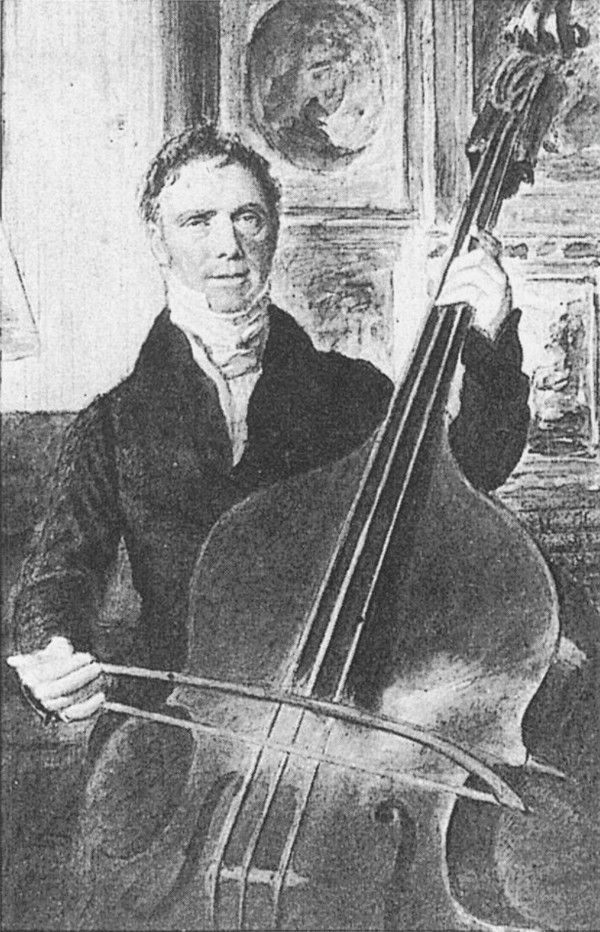
Domenico Dragonetti
Violinist Fritz Kreisler famously played this same trick on audiences and critics in the early twentieth century. He’d write pieces in the style of minor Baroque masters, then attribute those works to them rather than admitting his own authorship. In an era before Wikipedia and Spotify, most people were none the wiser!
While it may not be an authentic Dragonetti, it remains a charming concerto nevertheless.
Eduard Tubin: Double Bass Concerto (1948)
Estonian composer Eduard Tubin’s concerto, written in 1948, is sometimes described as the greatest double bass concerto of the twentieth century.
It also – bravely – features a full-size modern symphony orchestra. It is notoriously difficult to get a bass to project over an ensemble of that size.

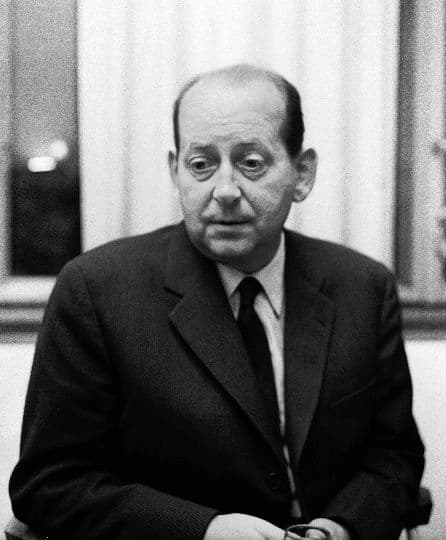
Eduard Tubin, 1958
In any performance, the conductor, soloist, and orchestra all have to work hard to make sure the soloist is never swamped.
However, when balance issues are successfully addressed, it’s a thrilling and dramatic statement piece, and it sets a new standard for the instrument’s expressive capabilities.
Nino Rota: Divertimento Concertante (1967–1971)
Best known as the composer of film scores for Fellini and The Godfather, Nino Rota also contributed one of the most colourful double bass concert works of the twentieth century.
His Divertimento Concertante (a double bass concerto in everything but name) is both whimsical and cinematic, drawing on the musical language of Respighi, Korngold, and others.

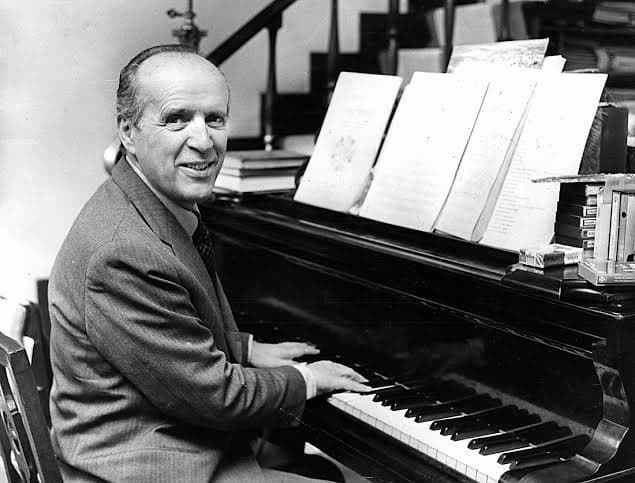
Nino Rota
It’s a charming chance for a bass soloist to step into an almost operatic solo role.
Einojuhani Rautavaara: Angel of Dusk (1980)
Following in the unconventionally shaped footsteps of the Rota Divertimento Concertante, Finnish composer Rautavaara’s Angel of Dusk is part concerto, part tone poem.
Written in 1980, it blends a mystical atmosphere with intense technical demands.


Einojuhani Rautavaara © newyorkclassicalreview.com/
Rautavaara explained the work’s origins:
“Looking out the window of a plane, I saw a strikingly shaped cloud, grey but pierced with colour, rising above the Atlantic horizon. Suddenly, the words Angel of Dusk came to mind.”
In this music, the double bass becomes the voice of the supernatural being that Rautavaara imagined flying alongside the wing.
Andres Martin: Bass Concerto (2012)
This work by contemporary composer and bassist Andres Martin is one of the most frequently performed modern bass concertos, having been played in over twenty-five countries to date.

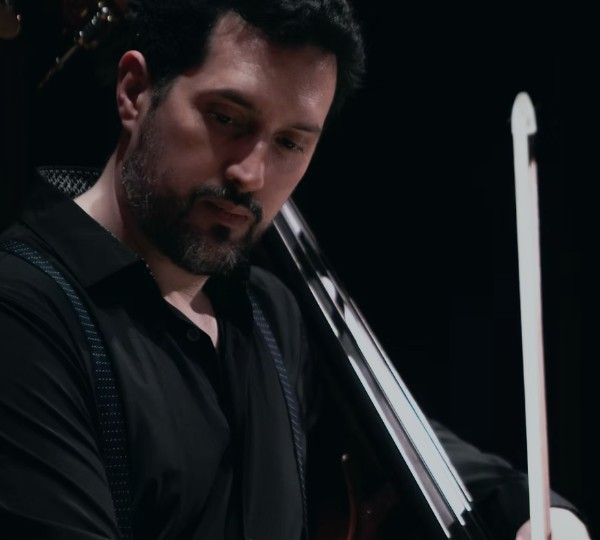
Andres Martin
First premiered in 2012, it is achingly romantic, possibly even old-fashioned. This is moody movie music crossed with the pizzazz of Astor Piazzolla, paying tribute to the composer’s Argentinian musical heritage. It’s a wonderful work.
Conclusion
Taken together, these ten concertos trace the evolution of the double bass from its refined classical era beginnings to its modern virtuosic present.
They showcase how performers and composers across centuries and continents have continually pushed the instrument beyond its traditional role as the foundation of the orchestra.
Whether they are graceful, mystical, fiery, or some combination of all of the above, each of these concertos proves why the bass can be such a successful solo instrument.
Which one is your favourite? Did we leave your favourite out?
For more of the best in classical music, sign up for our E-Newsletter





Unfortunately there’s an omission here. Tan Dun’s Wolf Totem remains a most performed doublebass concerto in Asia and beyond. It’s a pity that this piece has not been mentioned as there’s plenty of resource online.